


The Seychelles outer islands are the kind of place travel brochures describe as “the end of the world,” and for once the cliché fits. Reaching Alphonse, Cosmoledo, Astove or Farquhar involves small planes, boat crossings and a commitment of both time and money that puts these trips beyond most mainstream island escapes. Packages run into five figures and often bundle flights, meals and activities into opaque offers that sound indulgent but can leave guests feeling more trapped than pampered. This article looks specifically at Blue Safari’s outer island lodges through the lens of real overnight stays, focusing on what actually felt worth the cost and where the package model becomes a liability rather than a luxury.
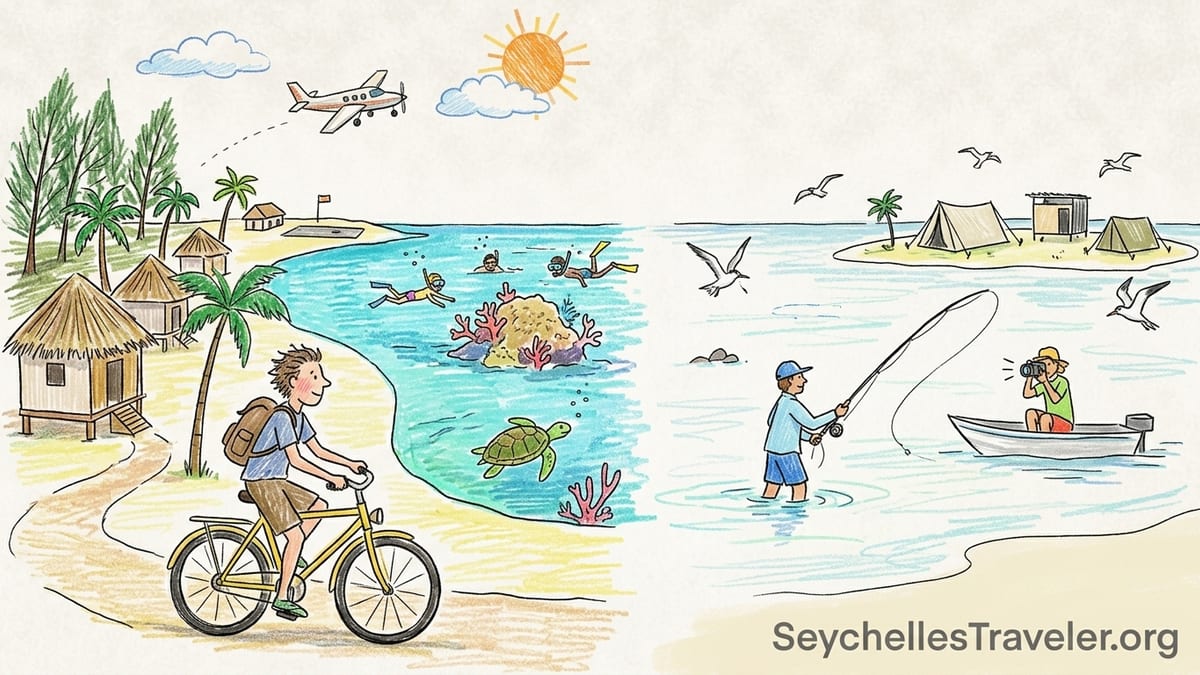
How Outer Island Packages Really Work (And Why Value Is Tricky)
Before choosing a remote resort in the Seychelles outer islands, it helps to understand how the logistics drive both price and experience. Blue Safari, which operates Alphonse Island Lodge as well as ultra-remote camps on Cosmoledo, Astove and Farquhar, typically packages return domestic flights from Mahé, full-board meals, non-motorised activities, basic snorkeling gear and Wi-Fi into a single per-person rate. Those flights are scheduled charters, often once or twice a week, which is why minimum stays are usually locked to specific rotations of 4, 7 or more nights. You are buying into a closed ecosystem where almost everything happens on the resort’s schedule, and very little can be adjusted on a whim.
On the plus side, that structure removes a lot of planning stress. Once you land on the tiny airstrip at Alphonse, you are transferred by buggy to your bungalow, given a weekly program of activities and told which non-motorised options, like kayaks and stand-up paddleboards, are included. Snorkeling trips along the reef edge, use of bicycles, some guided nature walks and the house reef may all be bundled at no extra charge under certain leisure packages. The downside is that more specialised experiences, such as bluewater fly-fishing, advanced diving or private guided trips, are frequently priced as substantial add-ons, and those extras can escalate an already expensive package into eye-watering territory.
From a value perspective, this means the “headline” price on a brochure can be misleading. A week at Alphonse or one of the atoll lodges might appear to include “everything,” but in practice only a core set of meals and soft activities are covered. Once you start adding daily guided fishing at outer flats, multiple-tank dive days or bespoke conservation trips, the true cost per person climbs steeply. My aim here is not to argue that these places are overpriced by definition, but to help you match the right lodge and package to your actual trip purpose so that you are paying for what you will genuinely use, not for a theoretical menu of options you will only sample once.
There is also the psychological reality of being on an atoll that is literally hundreds of kilometres from the main islands. Weather may cancel a fishing day or keep dive boats on the leeward side. Flights run on fixed days. There are no independent restaurants to wander to and no alternative dive shop down the beach if you dislike the schedule. For some travellers this feels blissfully simple; for others it can create a sense of being trapped in a resort bubble, particularly if rigid meal times and tightly controlled activity slots do not match their preferred pace.
Best First Outer Islands Experience: Alphonse Island Lodge
For a first outer islands trip that balances remoteness with relative comfort and flexibility, Alphonse Island Lodge is the logical starting point. The island sits in the Amirante group, far out into the Indian Ocean yet served by regular charter flights from Mahé. The beach bungalows and villas line a broad arc of white sand with turquoise shallows in front and mature palms behind. From a practical standpoint, the accommodation strikes a useful middle ground: more polished than a basic fishing camp, but not as hermetically luxurious as the newest flagship private islands.
The standard beach bungalow layout works well for couples or solo travellers. There is a simple bedroom under high thatch with effective air conditioning, a small indoor sitting area and an outdoor deck shaded by casuarina trees. The open-air bathroom has a generous rainfall shower with good water pressure and enough privacy planting that you forget there are neighbours. Furnishings run to white linens, natural woods and a few coastal blues rather than heavy design statements. It feels like an upgraded island guesthouse rather than a glossy design resort, which fits the barefoot atmosphere on the sand paths where almost everyone moves around by bicycle.
Meal service on Alphonse centres on a main bar-restaurant complex close to the jetty. Breakfast is usually a buffet of fresh fruit, pastries and eggs cooked to order, with additional à la carte dishes depending on occupancy. Lunch tends to be lighter, sometimes buffet-style with salads and grilled fish, sometimes plated. Dinner is more elaborate, frequently served as themed buffets or set menus featuring local tuna, jobfish, curries and barbecued seafood. Desserts lean sweet and simple. What I appreciated was the consistent quality of the fish and the variety over a week: despite the remote setting, the kitchen managed not to repeat itself too often. What grated, however, were the fixed meal windows. If your morning fishing is running late or you return from a long dive, you either rush to make the cutoff, wait for a reduced late offering or miss the communal atmosphere entirely.
Drinks are an important part of the cost equation. Soft drinks, tea and coffee were mostly included in my full-board package, but wine, cocktails and premium spirits were additional and priced at a level comparable to upscale city hotels. There is a small but thoughtful list of South African wines and classic cocktails at the main bar where guests congregate at sunset. For heavy wine drinkers, this can add significantly to the bill over a week. For light drinkers or those happy with beer and house wine, it feels less punitive but still notable given how much the package already costs.
Best for Couples: Quiet Corners on Alphonse and the Atolls
Couples looking for romance without formality will likely gravitate to Alphonse’s beach villas rather than the standard bungalows. The villas are more spacious and set with a greater sense of separation, with private plunge pools or larger decks facing the sand. Indoors, the additional space allows for a proper seating area and a more generous bathroom layout. If you plan to spend afternoons reading, napping and enjoying room service, the extra square metres matter. These villas are also better positioned for direct beach access, so you can step straight from your deck to the tideline without crossing the central sand path.
For couples who prioritise privacy above amenities, however, the smaller eco-style operations on Cosmoledo or Astove have a different appeal. Cosmoledo’s eco-camp, located on Wizard Island within the atoll, limits itself to a handful of pods, each blending canvas and hard structure, raised behind the beach with minimal visual impact. You sleep with the sound of surf across the reef and a sense that you are alone at the edge of the Indian Ocean. The interiors are more utilitarian than luxurious, with simple beds, fans and ensuite bathrooms designed for easy cleaning rather than indulgence. The genuine romance comes from shared experiences outdoors: walking empty coral beaches at sunrise, watching boobies and terns wheel overhead, swimming in a lagoon where the only other tracks belong to turtles.
The trade-off at these ultra-remote camps is that you surrender most of the casual freedoms of a larger island resort. Meal times are communal and fixed. Menus are limited by supply flights, so you will see similar ingredients in rotation. Wine choices are narrow and cocktails basic. If you want a late breakfast or a quiet private dinner, this is not the place. Service is generally warm and informal, more like staying with a small expedition team than being hosted by a classic luxury resort. Staff will remember your names and preferences, but they will also tell you frankly when conditions make an activity unsafe or when certain ingredients run out before the next shipment.
Wi-Fi for couples who need to stay lightly connected is usually available in central areas, but speeds vary significantly and heavy streaming is optimistic at best. At Alphonse I found the connection stable enough for messaging and the occasional call, while on the smaller atolls the signal deteriorated with weather and distance from the main generator. For many couples this limited connectivity is part of the charm; for anyone trying to work remotely it will feel constraining.
Best for Diving and Snorkeling: The Wall, the Flats and the House Reefs
If your primary reason for heading to the outer islands is to dive, then understanding how each lodge handles its underwater program is critical. Alphonse offers a full-service dive center that handles gear rental, guided dives and certification courses. The surrounding reefs and drop-offs are rich, with sites that include dramatic walls, cleaning stations and channels patrolled by reef sharks, rays and schooling fish. What impressed me was the professionalism of the dive staff and the small group sizes, which kept the experience personal even on popular days. Tanks and gear were carried and rinsed for you, and briefings were detailed, including current patterns and clear explanations of the plan and contingencies.
Snorkeling on Alphonse is a highlight in its own right. The lagoon holds seagrass beds that attract turtles, and the shallower coral heads are home to clouds of reef fish. Guided outings, often included in leisure-focused packages, take guests by skiff to outer reef sections where visibility improves and encounters with rays and larger fish become more common. The house reef accessible directly from the main beach is decent for unguided swims, provided you respect tide advice from staff. The included use of snorkeling gear makes spontaneous dips easy, although I preferred my own mask for comfort.
By contrast, Astove’s claim to fame is the Astove Wall, a near-vertical drop that begins just metres from shore and falls hundreds of metres into deep blue water. Diving here feels more like expedition diving than resort diving. Entries can be from small boats or shore, and currents are stronger and less predictable. Pelagic sightings, from sharks to large trevally, are significantly more common, but so are cancellations due to swell or wind. When I stayed at Astove, two planned dives on the wall were cancelled outright and a third was shortened due to deteriorating conditions. The crew handled this responsibly, but for a traveller who has flown thousands of kilometres for that signature wall dive, it can feel like a major letdown.
Cosmoledo and Farquhar also support diving, but in practice these atolls attract more dedicated fly-fishers than dedicated divers. Underwater life is stunning, with large aggregations of fish and relatively intact coral, yet the dive programs are secondary to fishing. Boat space, guide availability and timing are often prioritised for anglers first, with divers slotting into remaining capacity. If you are a serious diver who wants daily multi-tank days, Alphonse is the safer primary choice, possibly combined with a shorter add-on at an atoll camp if conditions and scheduling line up. If snorkeling from the beach and occasional boat trips is sufficient, then any of the outer lodges will keep you suitably dazzled.
Best for Fishing: Blue Safari’s Outer Atolls
Where Blue Safari truly shines is in its fly-fishing operations. Alphonse itself is a strong fishery, with accessible flats, bonefish, triggerfish and the ever-present possibility of giant trevally. Guides are experienced, patient and highly structured, pairing guests with skiffs that work long days across the tides. Gear rental is available, but most serious anglers bring their own specialised setups. The emphasis is on catch-and-release and on protecting sensitive flats, with strict rules about wading, handling and species targeting. Conservation fees are part of fishing packages and support monitoring and habitat protection, which gives at least some reassurance that pressure on the fishery is being actively managed.
Further out, Cosmoledo and Farquhar are legendary among saltwater fly-fishers. Here the number of rods is strictly limited per week to reduce impact, and packages bundle guided fishing days, skiff access and flights on top of full board. These are some of the most expensive fishing trips you can book anywhere in the Indian Ocean, yet for anglers who have chased giant trevally around the world, the combination of fish size, variety and wild scenery is compelling. My time on Farquhar underscored how these atolls bring out both the best and worst of the package model. On great days you might land multiple species across flats, channels and bluewater edges, guided by teams who know every coral head and tide line. On poor-weather days, wind and cloud reduce sight-fishing to frustration, and there are few alternative distractions beyond basic snorkeling or reading in the communal lounge.
Another important factor is physical intensity. Fishing here is not a gentle drift from a casting platform; it frequently involves hours of wading across uneven coral and turtle grass, clambering on and off skiffs and casting heavy lines into wind. Guides are excellent at pacing the day and providing water, snacks and brief rests, but guests who are not reasonably fit or who struggle with balance may find the experience more exhausting than rewarding. The package will not refund unused fishing days if you simply reach your limit, and medical evacuation from such remote areas is complicated and expensive. From a value viewpoint, these fishing trips are best suited to anglers who know what they are getting into and who will absolutely use their full quota of guided days.
Finally, be aware of the emotional risk. It is entirely possible to spend a very large sum on a week at Cosmoledo or Farquhar and come home without the dream fish you imagined. That is the nature of wild fishing, but the psychological impact of that outcome is magnified by the all-in package structure. This is why I encourage prospective guests to see these trips less as trophy hunts and more as immersive experiences in some of the most intact tropical marine environments left, where birdlife, turtles and the sheer scale of the atolls matter as much as what ends up on the end of a line.
Best True-Isolation Experience and Best Splurge: Ultrar-emote Atoll Camps
If your main goal is profound isolation, then the eco-camps on Cosmoledo or Astove offer an experience that goes far beyond even the quieter corners of Alphonse. These atolls sit more than a thousand kilometres from Mahé, surrounded by open ocean. Once the weekly or fortnightly plane departs you are effectively marooned with a small group of guests and staff. There are no other lodges, no local village, no passing cruise ships on the horizon. Nights are inky dark, with only generator-fed lights around the camp and a sky thick with stars. Sea birds roost in their thousands and turtles nest undisturbed on remote beaches.
The eco pods on Cosmoledo, for example, are adapted from lightweight structures and containers that can be removed with minimal impact when the season ends. Inside, you have a proper bed, functional storage, an ensuite with hot water and a fan to take the edge off the heat. Floors may creak, fittings may be practical rather than elegant and occasional sand finds its way into everything. That is part of the appeal. Meals are often communal buffets or plated dishes served in a simple mess area, with emphasis on fresh-caught fish and whatever vegetables and staples have arrived on the last flight. There might be one or two desserts per day and a single type of house wine by the glass. You are paying for location and access, not for culinary theatre.
This is also where the packages feel like the most extreme splurge. When you add the seasonal rates for the eco-camp, charter flights, conservation levies and guided activities, the cost per night can rival top-tier city suites. Yet your bathroom fixtures may rattle and the Wi-Fi may barely function. The value here lies entirely in how much you personally prize having an entire atoll nearly to yourself. During my stay, there were moments that felt beyond price, such as watching a green turtle nest under a Milky Way sky or drifting over giant bommies with no boat in sight, and other moments when I resented the inflexibility of a schedule that left whole afternoons empty because wind made both fishing and serious snorkeling unsafe.
The sense of being trapped by the package is strongest when weather does not cooperate. With no alternative tours, no spa complex and no external restaurants, you are left with books, board games and conversation. Staff do their best to improvise lectures, bird walks or tide-pool excursions, but they cannot conjure calm seas. Travellers who do not enjoy unstructured downtime may find this intensely frustrating. Those with a more expeditionary mindset, who relish sitting on a dune with binoculars and watching clouds roll by, will savour it. As a splurge, these atoll camps reward patience, flexibility and an interest in the broader ecosystem, not just in ticking off activities.
What I Liked and Disliked About the Package Model
Across all these outer island stays, certain patterns emerged. On the positive side, service was generally thoughtful and unfussy. Staff on Alphonse and the atolls made a point of learning names, noting dietary preferences and checking in after activities. Guides in particular were excellent, blending technical skill with an obvious personal attachment to the environment. Bicycles and buggies made it easy to get around Alphonse, and the lack of cars or outside traffic created a pleasant, slow rhythm to the days. Beaches were meticulously clean, with regular patrols collecting any ocean-borne debris.
I also appreciated the conservation element woven into daily life. Briefings at check-in emphasised turtle nesting zones, bird roosts and sensitive coral areas. Excursions were framed not only as entertainment but as ways to understand the atoll’s geology, currents and wildlife. Guests were gently but firmly discouraged from handling turtles or standing on coral heads. Fees are channelled into monitoring programs and habitat protection, and staff actively reported and removed ghost nets or illegal fishing markers. For a high-end operation, this environmental focus felt more substantial than what many island resorts deliver.
On the negative side, rigid meal and activity schedules were a constant irritation. Breakfast might be from seven to nine, lunch from twelve to two, dinner from seven to nine, with little wiggle room. If you are jet-lagged, prefer a very early start or simply lose track of time while photographing birds, you risk missing a meal. Room service is limited or non-existent in the outer atolls, and off-hours snacks are basic. Activity sign-ups can feel like securing scarce tickets: popular snorkel or dive trips fill up quickly, and same-day requests are rarely possible. This regimented approach keeps operations efficient but undermines the sense of freedom many travellers expect at such price points.
Another irritation is the layering of activity add-ons over already expensive packages. While it is understandable that intensive experiences like guided fly-fishing or multi-tank dives cost extra, there were moments when the distinction between included and excluded felt arbitrary. A guided nature walk might be free, but a slightly longer version along a different route attracted a fee. A casual line-fishing session from the jetty could be complimentary, while a short skiff trip just beyond the reef edge, using the same gear, was charged as an excursion. Guests who do not read the inclusions line by line before arrival can easily build up a surprising final bill.
Weather-related cancellations are handled conservatively and safely, which is essential so far from major medical care, but the financial and emotional impact usually sits with the guest. Rarely are significant refunds offered for lost days; at best, staff try to reschedule or propose alternative activities. When this works, you might swap a cancelled dive for a fascinating intertidal walk. When it does not, you may simply lose the opportunity. The remoteness that makes these atolls so alluring is precisely what limits flexibility.
The Takeaway
Choosing an outer islands resort in the Seychelles is less about star ratings and more about matching your priorities to the realities of remote, package-based travel. Alphonse Island works best as a first step into this world, with comfortable bungalows and villas, a capable dive center, solid food and enough non-fishing activities to keep mixed-interest couples or friends content. It delivers a real sense of being off-grid while still offering bicycles, Wi-Fi in key areas and a restaurant that can handle varied diets.
The smaller atoll camps on Cosmoledo, Astove and Farquhar push deeper into the frontier. For dedicated fly-fishers and adventurous divers, they offer access to some of the most intact tropical marine environments available to paying guests. For travellers who value solitude, seabird colonies and star-filled skies as much as room service, they can justify their high price as once-in-a-lifetime expeditions. Yet they also magnify every downside of the package model: rigid scheduling, activity add-ons and the risk that weather will curtail the very experiences you came for.
When assessing whether these stays are truly worth the cost, start with an honest inventory of what you will actually do. If you plan to fish six days out of seven, a fishing-focused package on Farquhar or Cosmoledo may offer intense value despite the headline rate. If you are primarily seeking beach time, light snorkeling and good food, Alphonse’s leisure-oriented offers are more sensible. Travellers who dislike structure, who resent fixed meal times or who need guaranteed daily activities may be happier on the inner islands or at less isolated private islands where independent operators and alternative dining exist.
Ultimately, the outer islands reward those who come not only for luxury but for landscape and wildlife. The most satisfying trips I witnessed were those where guests measured success in turtles seen, birds identified and unfamiliar shades of blue memorised, not strictly in fish landed or dives logged. If you arrive with that mindset, choose your lodge and package thoughtfully and accept that weather and logistics will sometimes overrule your plans, the outer islands can feel not just worth the cost but like a privileged glimpse of what tropical oceans once were, and could still be again.
FAQ
Q1. How long should I stay on Alphonse Island for a first outer islands trip?
For a first visit, seven nights is a good balance. Flight schedules often dictate minimum stays, and a week allows for rest days, weather disruptions and a mix of diving, snorkeling, fishing and simple beach time without feeling rushed.
Q2. What is typically included in Alphonse Island’s full-board or leisure packages?
Most packages bundle the return charter flights from Mahé to Alphonse, accommodation, three daily meals, soft drinks like water, tea and coffee, non-motorised activities such as kayaks and stand-up paddleboards, basic snorkeling gear, selected guided nature walks and Wi-Fi in main areas. Guided fishing, advanced diving and premium drinks are usually charged separately.
Q3. Are Cosmoledo, Astove and Farquhar suitable for non-fishing companions?
They can be, but expectations matter. There is excellent snorkeling, birdwatching and beach walking, yet the daily rhythm centres on fishing. Non-anglers who enjoy solitude, reading, photography and unstructured nature time will cope well, while those who want constant varied activities may feel bored or sidelined.
Q4. How reliable is the Wi-Fi on the outer islands?
On Alphonse, Wi-Fi in central areas is usually stable enough for messaging and light work, although speeds can drop at peak times. On the smaller atoll camps, connections are slower and less predictable, often limited to basic email and messaging. Streaming and heavy uploads are rarely realistic.
Q5. Do I need to be an experienced diver or angler to enjoy these lodges?
No. Beginners can take entry-level dive courses on Alphonse and try introductory fishing or snorkeling sessions. However, the more remote atolls are best appreciated by guests with at least some experience or strong interest in these activities, because the environment is demanding and the packages are structured around intensive time on the water.
Q6. What happens if bad weather cancels my planned activities?
Safety decisions rest with guides and management. If wind or swell makes fishing or diving unsafe, outings are postponed or cancelled, and staff may offer alternative options like lagoon snorkeling, shore walks or talks. Significant refunds are uncommon, so it is wise to budget with the understanding that not every planned activity may run.
Q7. How family-friendly are the Seychelles outer islands?
Alphonse can work well for outdoorsy families with older children who can snorkel, cycle and follow safety instructions around boats and wildlife. The ultra-remote atoll camps are less suitable for young children due to long travel times, basic medical facilities and the focus on adult-oriented fishing and diving.
Q8. What should I pack that might not be available at the lodges?
Bring any specialised medication, preferred sunscreen, personal snorkeling mask if fit is important, lightweight long-sleeve clothing for sun protection, reef-safe sandals and any specific camera or fishing gear you rely on. On the atolls, on-island shopping is almost non-existent, so it is safer to arrive fully prepared.
Q9. Are the outer island resorts environmentally responsible?
The operations discussed here incorporate conservation fees, habitat monitoring and strict catch-and-release policies. Guests are briefed on protecting turtle nests, bird colonies and coral, and staff actively remove marine debris. While flying to remote islands has an environmental cost, the lodges do work to minimise on-site impact and support local ecosystems.
Q10. How far in advance should I book a trip to the Seychelles outer islands?
For peak fishing or holiday seasons, it is sensible to book at least nine to twelve months ahead, especially for limited-rod atolls like Cosmoledo and Farquhar. Shoulder-season leisure stays on Alphonse sometimes have better availability, but flights and specific room types still fill quickly.