

I went to Seychelles with the usual Instagram-fueled expectations of flawless beaches, technicolor reefs and gently lumbering giant tortoises. What I found was more nuanced: some experiences were every bit as magical as the brochures, others felt overpriced or crowded, and a few surprises quietly became the highlight of my trip. This guide is organized by experience type rather than by island, and focuses on what I actually did, paid for and would (or would not) repeat with my own money.
Slow Beach Days: When Seychelles Really Feels Like Paradise
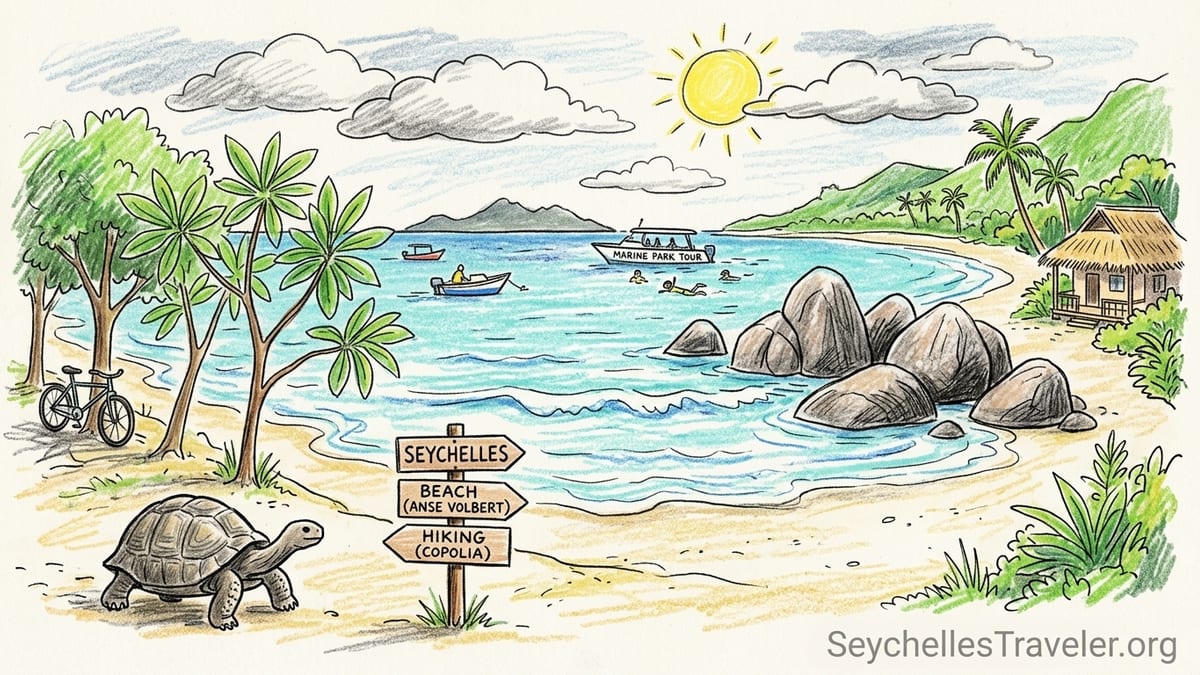
The most satisfying days of my Seychelles trip were usually the least scheduled. One standout was a self-guided beach day at Anse Volbert on Praslin, where I stayed in a small guesthouse a five minute walk from the sand. I did not pay an entry fee and only spent about 250 to 300 Seychelles rupees on takeaway lunches and fresh juice from beachside stands. The sea was calm with only a light swell, the sky partly cloudy and the humidity high but bearable. I swam, read under a takamaka tree and watched local kids play football on the sand. There were vendors, but the atmosphere stayed relaxed, especially before midday day-trippers arrived. I would happily repeat this exact low-key beach day and would even plan an extra night on Praslin just to do so.
On Mahé, my main beach base was Beau Vallon, reached by public bus from Victoria for about 12 rupees each way. I booked accommodation independently and did not pay for beach access. The bay is busier, with jet skis, banana boats and sunset cruises lining up along parts of the shore. I paid around 100 to 150 rupees for plates of grilled fish and rice from local takeaways behind the beach and another 50 to 75 rupees for fresh fruit or samosas from vendors. On clear afternoons the light over Silhouette Island was beautiful, but the ambiance became more commercial as stalls and tour hawkers appeared. I would stay in the Beau Vallon area again as a practical base, but I would not choose it as my primary “dream beach” once I had seen quieter stretches elsewhere.
The one beach I left with mixed feelings was Anse Source d’Argent on La Digue, which I reached by ferry from Praslin and then by rented bicycle. Access runs through the L’Union Estate area, which had an entrance fee of roughly 150 rupees when I visited, paid at the gate in cash. In the first hour after opening, with the tide low and just a handful of people weaving between the granite boulders, it felt like walking through a fantasy film set. By late morning, however, large tour groups began to arrive and the narrow coves started to feel crowded. Between the park fee, bike rental and snacks, I spent close to 500 rupees for a half day and found myself retreating early. I do not regret going once, but I would not repeat the visit at peak times and would instead aim for the very first or last light of the day or skip it if I only had a short stay on La Digue.
Overall, my clearest lesson from beach days was that Seychelles rewards slowness. When I rushed for “must see” lists, I noticed the crowds and costs more. When I settled in for a simple day within walking distance of my guesthouse, the islands felt both more peaceful and better value.
Snorkeling and Marine Parks: From Shore Reefs to Paid Boat Trips
My most memorable snorkeling was not on the most expensive excursion but in the Baie Ternay and Port Launay marine protected area off northwest Mahé, managed by the Seychelles Parks and Gardens Authority. I booked a small-group morning boat trip in Beau Vallon through a local kiosk that worked with independent skippers, paying about 800 rupees per person in cash. This covered three hours on the water, two snorkeling stops and the 200 rupee marine park entry fee for Baie Ternay and Port Launay. The boat was basic but clean, safety briefings were clear and our skipper pointed out coral bommies and schools of fusiliers he knew well. The water visibility was good with only a light current, and we saw turtles, parrotfish and healthy patches of branching coral. I would absolutely pay to do this particular trip again, especially in the morning when the sea was calm and the sun lit the reef from a high angle.
In contrast, I booked a more expensive full day tour from Praslin to the St Pierre islet and Curieuse marine park through a hotel-recommended operator. The package cost the equivalent of around 95 euros per adult, including boat transfers, barbecue lunch, basic snorkel gear and Curieuse landing fees. Actual snorkeling time at St Pierre was roughly 40 minutes, split between two short stops. While the granite islet was as photogenic as promotional images suggest, the reef was busier than I expected and we shared the water with several other boats. A mild swell and patchy cloud cover also reduced water clarity. The guides were friendly and helped less confident swimmers, but the experience felt more like a box-ticking excursion than an in-depth marine encounter. Given the cost, I would not prioritize this specific tour again unless I was traveling with first-time snorkelers who valued the convenience of an all-inclusive package.
I also experimented with shore snorkeling at Anse Volbert and Côte d’Or on Praslin, using my own mask and snorkel kit. Here I simply walked into the water at high tide, spending nothing beyond the purchase cost of my gear. On calm mornings I found scattered coral heads with damselfish and the occasional turtle in seagrass beds. There was boat traffic to be aware of, but staying close to the marked swimming areas and hugging the shallows kept things comfortable. The freedom to enter and exit the water at will and the absence of a group schedule made these sessions surprisingly satisfying. If I returned, I would again pack my own mask and carve out unscheduled mornings for this kind of low-cost, self-paced snorkeling, using paid boat trips more selectively.
Looking back, the marine parks managed by the Seychelles Parks and Gardens Authority delivered the best balance of protection and access when visited with thoughtful local boat operators. What mattered most was not chasing the longest itinerary, but choosing fewer sites with more in-water time and checking conditions the day before to avoid rough seas or heavy rain.
Diving and Underwater Encounters I Chose to Skip
I arrived in Seychelles intending to dive, but a combination of seasonal visibility, recent coral bleaching reports and my own limited time nudged me to reconsider. On Mahé, I visited two dive centers near Beau Vallon to check current conditions and prices. Both were quoting roughly 150 to 180 euros for a two tank boat dive including gear rental, with sites inside marine park boundaries attracting additional fees. Guides explained that visibility fluctuates with trade winds and that some shallow reefs had suffered bleaching in recent warmer seasons, though deeper granite slopes still offered good fish life.
In the end, I decided not to dive. Partly it was budget related, since dedicating a full day and over 150 euros to two dives would have forced sacrifices elsewhere. Partly it was because I was already getting satisfying experiences snorkeling in marine parks at a fraction of the cost. It also felt important to be honest about my priorities: I am an enthusiastic but not obsessive diver, and I realized I was chasing the idea of diving in Seychelles more than a specific must-do site. For travelers with more time and a stronger dive focus, exploring locations near the Sainte Anne or Baie Ternay areas with reputable operators could be worthwhile. For my own trip, however, skipping diving freed up both budget and energy for other experiences I ultimately valued more.
Based on talking with instructors and reading up on local conditions, I would consider returning to dive in a future cooler, calmer season if I planned a longer stay. I would likely base myself near Beau Vallon or on Praslin, ask specifically about recent visibility at granite reef sites rather than only at shallow coral gardens, and schedule dives early in the trip so that weather disruptions would be easier to absorb. For this trip, though, diving remained a researched but untried activity, and I do not regret reallocating that time toward hikes and self-guided snorkel days.
Hiking and Vallée de Mai Style Nature Experiences
The most rewarding inland time I spent in Seychelles was on official nature trails managed by the Seychelles Parks and Gardens Authority, along with a visit to the palm forest of Vallée de Mai on Praslin. On Mahé, I chose the Copolia trail in Morne Seychellois National Park. I organized it independently, using the public bus from Victoria to the trailhead and paying a modest entrance fee at the small SPGA kiosk near the start. Exact fees can change, but on my visit the charge was in the low hundreds of rupees, payable in cash. The trail climbed through humid forest on a clear dirt path with stone steps in steeper sections and occasional wooden railings. In total it took me about two hours return including plenty of photo stops, with the last twenty minutes being a steady uphill push.
Humidity was the main physical challenge. I set out around 8:30 in the morning, when the air was still relatively cool, and carried at least 1.5 litres of water. By the time I reached the open granite slabs at the summit, clouds were building over the interior but the view across Victoria and the marine park islands was still sharp. There was no guide required for this particular trail, though signage recommended not hiking in heavy rain because granite surfaces become slippery. I would absolutely repeat the Copolia hike and would even choose accommodation on Mahé that made early starts easier. It gave me a sense of the islands beyond the beaches and felt very fairly priced for the infrastructure provided.
On Praslin, I visited Vallée de Mai, managed by the Seychelles Islands Foundation. I bought my ticket at the entrance, paying approximately 450 rupees for adult admission, which granted access to several well-marked loop trails through the coco de mer palm forest. I opted for a middle-distance trail, walking for about two hours under a dense canopy that filtered the midday sun. The paths were mostly shaded with some short, steeper stair sections, and benches appeared at intervals. A guide offered to lead a group walk for an additional fee, but I chose to use the printed map and informational panels instead. The weather was dry with dappled light cutting through the palms, ideal for photography without harsh glare.
While Vallée de Mai is undeniably beautiful and the coco de mer palms are fascinating, the experience felt a touch more museum-like than wild. There were more people on the main paths than I expected, including tour groups moving in clusters, and the sense of solitude never quite materialized. I am glad I went once for the World Heritage aspect and the educational displays, but given the price and the number of other visitors, I would not pay to return on a short stay. If I had to choose, I would rather spend a second morning on a national park trail like Copolia or another Morne Seychellois route, which delivered more variety and fewer crowds for a similar or lower outlay.
For travelers considering other Vallée de Mai style experiences, Praslin National Park and the Fond Ferdinand reserve are often suggested as alternatives, with different trail networks and viewpoints over the forest. I did not have time to try these personally, but I met several hikers who preferred Fond Ferdinand’s guided walks and vistas. If I return, that is the inland nature experience I would prioritize next.
Giant Tortoise Encounters: Curieuse versus Easier Options
Like many visitors, I arrived in Seychelles determined to see giant tortoises. My first close encounter was on Curieuse Island, a marine national park north of Praslin that the Seychelles Parks and Gardens Authority manages as a sanctuary. This was part of the same full day boat excursion that visited St Pierre for snorkeling. After landing on one side of Curieuse, our group hiked a short coastal and mangrove trail of about thirty to forty minutes to the tortoise area at Baie Laraie. The walk was on a mix of boardwalk and dirt track with minimal elevation changes, suitable for most fitness levels in dry weather but hot and sticky under the midday sun.
At the tortoise area, dozens of Aldabra giant tortoises roamed freely in a fenced sanctuary space, with shaded areas and water troughs. Rangers monitored interactions and answered questions. We had roughly an hour to wander, watch feeding and gently touch their shells under staff supervision. The experience was undeniably charming, especially seeing younger tortoises lumbering among roots and rocks. However, I could not ignore that the total cost of the excursion, close to 95 euros including transport, lunch and park fees, translated into a very expensive hour with the animals. Given that ferry schedules and weather had to align, it also made for a logistically heavy day.
Later on Mahé, I visited the botanical gardens near Victoria, which keep a smaller group of giant tortoises in an enclosed paddock. Entrance to the gardens cost significantly less than a marine park tour, and a short taxi ride from central Victoria delivered me to the gate. While the setting was more manicured and the number of animals fewer, the opportunity to observe and photograph them up close without dedicating an entire day at sea was welcome. The physical effort here was minimal, limited to strolling paved paths for an hour or two.
With hindsight, I would make different choices. If I were short on time or budget, I would be content seeing tortoises at the botanical gardens on Mahé or at L’Union Estate on La Digue, accessed via the same ticket used for Anse Source d’Argent. For travelers who enjoy boat trips and want to combine mangrove walking, beach time and snorkeling with tortoise viewing, Curieuse still makes sense, especially when booked with a reputable operator who includes park fees transparently in the price. Personally, having done both, I am unlikely to pay for another full day Curieuse tour, but I would return to the botanical gardens as a gentle, low-effort outing with visitors who had never seen the species before.
Cycling, Cultural Sightseeing and Everyday Creole Food
La Digue was where I most enjoyed moving at local speed. I rented a bicycle near the jetty for around 150 to 200 rupees for the day, paying in cash with a simple paper contract. The bike was a standard single speed with basket, good enough for pottering along coastal roads but not ideal for steep hills. Over the course of the day I cycled between Anse Severe, L’Union Estate and quieter stretches near Anse Patates, covering perhaps ten to fifteen kilometers in total. The physical effort was moderate, mostly flat with a couple of short climbs that required me to hop off and push. Weather shifted between bright sun and brief showers, but warm temperatures meant I dried quickly. This was one of the few activities I would repeat almost exactly as it was: low cost, flexible, and full of serendipitous moments like stopping at a roadside fruit stall or watching fishermen mend nets in the shade.
On Mahé, my cultural sightseeing concentrated around Victoria. I spent a half day walking from the bus station to the Sir Selwyn Selwyn-Clarke Market, the clocktower, Hindu temple and a handful of nearby side streets. There were no entry fees for the public spaces I visited, and my main expenses were a light lunch from a takeaway stand and a small bag of spices from the market, totaling perhaps 200 rupees. The physical effort was light, though the midday sun between buildings could be intense. I appreciated the glimpse into everyday life and would recommend this to anyone who wants context beyond the resorts. I would easily repeat this wander on a future trip, though I would start earlier in the morning to avoid the heaviest heat.
Food was an area where expectations and reality sometimes diverged. I ate at a mix of simple takeaways, mid-range restaurants and one well-known Creole buffet on Mahé. Takeaway plates of fish curry, rice and salad generally cost between 75 and 150 rupees, sometimes less in smaller neighborhood spots. A typical dinner in a sit-down Creole restaurant with a main dish, side and a drink ran closer to 300 to 450 rupees per person. I tried classic dishes like octopus curry in coconut milk, grilled red snapper with chili sauce and smoked fish salad. Flavors were often excellent, but service could be slow and portion sizes variable. The most consistently satisfying meals, in terms of both taste and value, came from no-frills takeaways and food trucks rather than from hotel restaurants.
One organized food experience I considered was a dedicated Creole cooking class and market tour on Mahé, advertised at around 75 to 100 euros per person for a half day, including ingredients and a shared meal. After comparing the price with what I was already learning simply by eating in local spots and chatting with cooks, I decided to skip it this time. If I return with more time and a stronger focus on culinary exploration, I might join a small-group class to deepen my understanding of spice blends and home cooking techniques. For this trip, though, my most authentic food memories came from casual, unplanned meals at plastic tables, not from more formal experiences.
Boat Trips and Experiences I Would Not Repeat
While boats are practically unavoidable in an island nation, not all my time at sea felt like money well spent. Beyond the Curieuse and St Pierre excursion described earlier, I also joined a sunset cruise from Beau Vallon, booked spontaneously from a beach kiosk. The price was around 500 rupees per person for a ninety minute ride along the coast, including a soft drink and simple snacks. The boat left slightly late, and while the crew were polite, commentary was minimal and music from other vessels echoed across the bay. The sunset itself was attractive, with the sky glowing soft orange over Silhouette Island, but the overall experience felt generic. I realized I could have enjoyed almost the same view just sitting on the sand with a takeaway dinner.
If I had that evening again, I would skip the cruise and instead invest in a higher quality day outing or keep the funds for activities with more substance, such as another guided hike or a longer marine park snorkeling session. Boat trips that combine several shallow experiences in one checklist style day tended to blur together, whereas focused trips with plenty of unhurried time at one or two sites stood out. Weather also played an important role. On slightly hazy or overcast days, the romantic sunsets and vividly turquoise waters that marketing photos suggest were more subdued, making it harder to justify the extra cost.
Another disappointment, though minor, was a quick “glass-bottom boat” style ride from a resort area, promoted as a chance to see reef life without getting wet. I paid roughly 250 rupees for a forty minute loop. The glass panels offered limited visibility, clouded by scratches and sea spray, and the shallow seagrass bed beneath us did not showcase the more colorful coral scenes I had already seen while snorkeling. Children on board enjoyed it, but as an adult who was comfortable in the water, I would not repeat it. For anyone able to snorkel, even briefly in waist-deep water near the shore, the difference in immersion and sense of wonder is dramatic.
Taken together, these experiences taught me to be highly selective with paid boat trips. If I return to Seychelles, I will gladly pay for a well reviewed, small-group outing into a marine protected area where most of the itinerary is dedicated to either snorkeling or a meaningful visit like a long mangrove walk. I will avoid short sightseeing-only cruises in busy bays and any excursion where most of the time is spent on the boat rather than in or near the environment I came to see.
FAQ
Q1. How much should I budget per day for activities in Seychelles?
For a mix of beach time, one paid activity and some local transport, I found that 800 to 1,200 Seychelles rupees per person per day covered most non-accommodation costs, not counting large boat tours or diving.
Q2. Are the marine parks in Seychelles worth the entry fees?
In my experience, marine parks like Baie Ternay and Port Launay offered noticeably healthier reefs and better wildlife than unprotected areas, especially when visited on small-group boat trips that included the park fee in the price.
Q3. Is Vallée de Mai on Praslin worth visiting?
Vallée de Mai is worth a visit if you value World Heritage sites and want to learn about coco de mer palms, but it can feel busy and relatively expensive. I was glad I went once, though I would not repeat it on a short trip.
Q4. What is the easiest way to see giant tortoises in Seychelles?
The least complicated options I tried were visits to the botanical gardens on Mahé or to L’Union Estate on La Digue, which both keep giant tortoises in managed enclosures and require only a short taxi ride or bike trip.
Q5. Do I need to book boat trips and hikes in advance?
For popular full day boat tours from Praslin and La Digue, I found it safer to book at least a day or two ahead, especially in peak season. For hikes on official SPGA trails such as Copolia, I could simply arrive early at the trailhead and pay the entrance fee on site.
Q6. How physically demanding are the main hiking trails?
Trails like Copolia involved steady but manageable climbs on good paths and took about two hours return for an average fitness level, with humidity being more challenging than distance. Some longer or steeper routes in Morne Seychellois National Park may require a guide.
Q7. Is renting a bicycle on La Digue a good idea for most visitors?
Yes, I found cycling on La Digue to be one of the most enjoyable and practical ways to get around. Distances are short, and most roads are flat or gently rolling, though very young children or travelers with mobility issues might prefer a buggy taxi.
Q8. Can I eat well in Seychelles without spending a lot on restaurants?
I ate some of my best meals at inexpensive takeaways and food trucks, paying between 75 and 150 rupees for hearty plates of Creole food, which felt like excellent value compared to resort dining.
Q9. When is the best time of day for popular beaches and viewpoints?
Early mornings worked best for me at places like Anse Source d’Argent and on trails like Copolia, both to avoid heat and to enjoy quieter conditions before tour groups and midday sun arrived.
Q10. Which activities would you personally pay to repeat on a future Seychelles trip?
I would happily repeat slow beach days near my guesthouse, small-group snorkeling in marine parks such as Baie Ternay, the Copolia hike in Morne Seychellois, and a full day of relaxed cycling and casual eating on La Digue.